A chimney flue is the vertical passage inside the chimney that vents smoke and carbon monoxide from a fireplace, wood stove, or heating appliance. When a Hartford homeowner says "i got my flue clogged," the cause is…
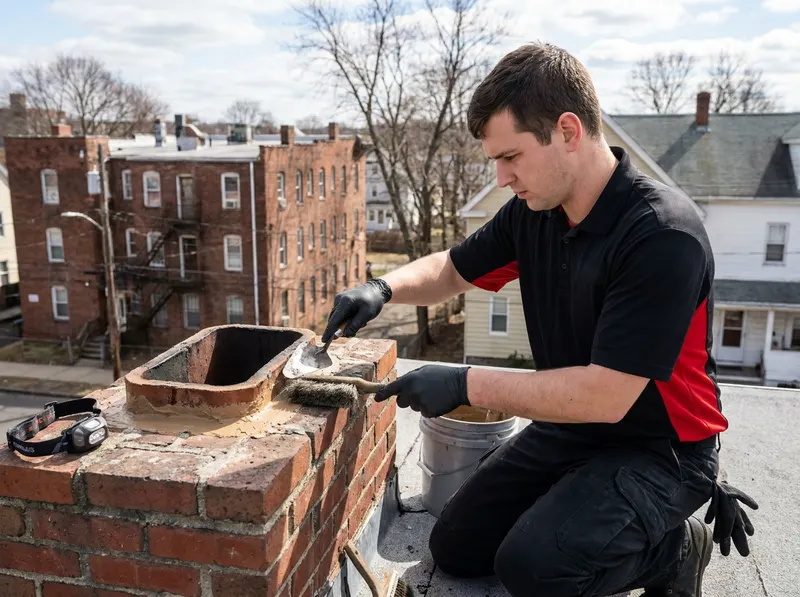
A chimney flue is the vertical passage inside the chimney that vents smoke and carbon monoxide from a fireplace, wood stove, or heating appliance. When a Hartford homeowner says "i got my flue clogged," the cause is usually creosote buildup, a collapsed clay tile, a bird or squirrel nest, or leaves and debris that fell in through an uncapped top. A clogged flue is handled first with flue cleaning: the sweep removes creosote and debris, then runs a camera scan to see whether the blockage was surface buildup or a structural failure. FlueGuard photographs the flue interior so the reason for the clog is visible, not just described.
Repair depends on what the camera finds. If the clay tile liner has hairline cracks or gaps in the mortar joints, sealing and patching restores a smoke-tight flue and typically runs $250-$700. If tiles are cracked through, spalling, or missing, a stainless-steel chimney flue liner is installed inside the existing chimney; this chimney relining creates a new UL-listed venting path and commonly runs $2,000-$5,000 depending on flue height and diameter. NFPA 211 requires that a chimney vent an appliance safely, and the Chimney Safety Institute of America (CSIA) identifies a damaged or missing liner as a recognized fire and carbon-monoxide hazard, which is why a cracked liner is a repair rather than an optional upgrade.
Some homeowners in the West End and Asylum Hill, where many houses date to the early 1900s, have a second unused flue from an old coal or oil setup. When someone says "i want to seal it off," the option is to permanently cap and seal that abandoned flue at the top and close the thimble at the bottom so cold air, water, and animals stop entering. Sealing off an unused flue is different from repairing an active one: an active fireplace or furnace flue must vent, so it cannot simply be sealed. If the flue that is clogged still serves a working appliance, the fix is cleaning and, if needed, relining, not sealing. If the flue served an appliance you no longer use, sealing it off is the direct answer.
Flue conditions vary by house across Hartford. Older brick chimneys in Frog Hollow, Barry Square, and South Green often have clay tile liners installed decades ago that develop cracks from years of heat cycling. Homes in Parkville, Blue Hills, Upper Albany, Behind the Rocks, and Sheldon-Charter Oak with masonry near Cedar Hill Cemetery and Colt Park see freeze-thaw damage to exterior chimney crowns, which lets water reach the flue and accelerates liner failure. A Level 2 inspection, which uses a camera and is called for after a chimney fire, a property sale, or a change of appliance under CSIA guidance, tells you whether a Hartford flue needs cleaning, sealing, or full relining. Every flue job at FlueGuard starts with a free on-site estimate and a written finding before any work is quoted.
Every job gets a firm, written price after a free on-site visit.
Tell us about your flue repair & sealing job in Hartford and we'll send a clear, written quote, usually the same day.
 Flue Guard Chimney Sweep