A chimney water leak usually shows up first as a brown ceiling stain, a musty smell in the firebox, or white powdery deposits on the brick. Four failure points cause the large majority of leaks: a cracked concrete…
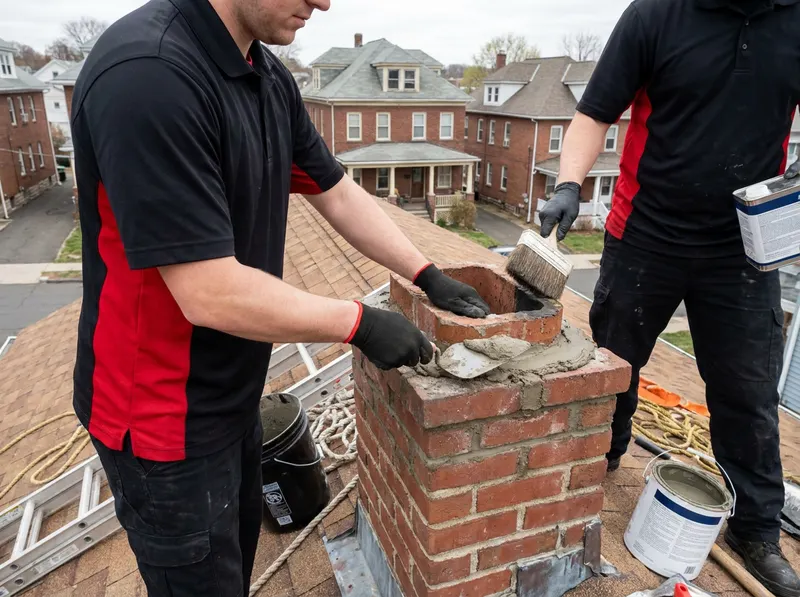
A chimney water leak usually shows up first as a brown ceiling stain, a musty smell in the firebox, or white powdery deposits on the brick. Four failure points cause the large majority of leaks: a cracked concrete crown at the top, failed step or counter flashing where the chimney meets the roof, spalling brick and eroded mortar joints, and a missing or corroded cap. Diagnosing which one is at fault matters, because sealing the wrong surface leaves the leak active. FlueGuard inspects all four from the roof and inside the firebox, photographs the actual entry point, and includes those images in the written finding so the homeowner can see the evidence rather than take a verbal claim.
Deciding between a targeted repair and full waterproofing depends on the brick condition. If the crown is cracked but the brick face is sound, a crown patch plus flashing correction fixes the leak and waterproofing is optional. If the brick is already absorbing water, common on older chimneys in the West End, Asylum Hill, and Frog Hollow where 1920s-era masonry has lost its factory glaze, a breathable siloxane or silane water repellent applied to the brick face is the durable fix. The trade-off: a vapor-permeable repellent lets trapped moisture escape while blocking rain, whereas a film-forming acrylic sealer traps water inside the brick and accelerates spalling in freeze-thaw cycles, so film sealers are not recommended for chimney masonry.
Hartford's freeze-thaw climate is the driving force behind local chimney leaks. Water absorbed into brick and mortar expands when it freezes, widening cracks each winter; a single untreated crown crack can grow measurably across one cold season. Chimneys on exposed rooflines in Blue Hills, Barry Square, Behind the Rocks, and Upper Albany take the most wind-driven rain and tend to show flashing failure first. A proper repair sequence runs: 1) inspect and photograph all four leak points, 2) confirm the active entry with a controlled water test where needed, 3) repair the crown, flashing, or joints, then 4) apply water repellent to the surrounding masonry once repairs cure.
The leak inspection follows the Level 1 and Level 2 standards defined in NFPA 211, the National Fire Protection Association standard for chimneys and vents. A Level 2 inspection is appropriate after water damage because it adds accessible attic, crawlspace, and roof examination. The Chimney Safety Institute of America (CSIA) recognizes water penetration as a leading cause of premature masonry failure. A verified requirement worth noting: a good chimney water repellent must be vapor-permeable, the CSIA and repellent manufacturers specify products rated to let the chimney breathe. Sealing a chimney with a hardware-store waterproof coating that is not vapor-permeable can void the benefit and worsen brick damage, which is a common misunderstanding among homeowners in Parkville, Sheldon-Charter Oak, and South Green who apply a general masonry sealer themselves. FlueGuard provides a free on-site estimate; the estimate is written after the chimney is examined, not quoted sight-unseen. To reach the shop, call (860) 925-9564, or text a photo of the chimney and any water stain for a preliminary read.
Every job gets a firm, written price after a free on-site visit.
Tell us about your chimney leak repair & waterproofing job in Hartford and we'll send a clear, written quote, usually the same day.
 Flue Guard Chimney Sweep