A chimney rebuild replaces the deteriorated section of masonry course by course, while a masonry repair keeps the existing structure and fixes only the failed mortar, brick, or stone. The right choice depends on how…
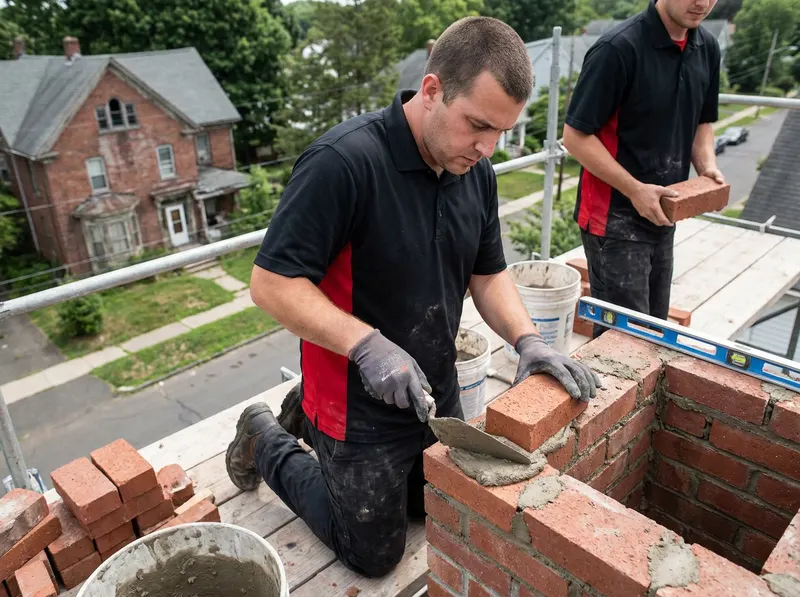
A chimney rebuild replaces the deteriorated section of masonry course by course, while a masonry repair keeps the existing structure and fixes only the failed mortar, brick, or stone. The right choice depends on how much of the stack is still sound. When a tree limb or storm has knocked about half the chimney down and put cracks in the rest of it, a partial rebuild from the damage line up is usually the fit; when the mortar is crumbling throughout or the flue liner has shifted, a full chimney replacement is the more durable path. FlueGuard states the free on-site estimate plainly: a technician measures the stack, checks clearances against NFPA 211, and shows you what is cracked before recommending a scope.
Chimney masonry repair addresses the most common Hartford problems: open mortar joints, spalling brick face, and a cracked crown that lets water into the stack. Chimney crack repair on vertical cracks running through several courses is a warning sign, vertical cracks often signal footing movement or freeze-thaw damage, which is widespread on the older brick chimneys in Asylum Hill, the West End, and Frog Hollow where many stacks date to the early 1900s. Freeze-thaw cycles in Hartford County drive water into hairline cracks, then expand it when temperatures drop below 32°F, widening the crack each winter. A Level 2 inspection, defined by the Chimney Safety Institute of America (CSIA), examines accessible interior and exterior surfaces and is the standard used to judge whether repair or rebuild is warranted after damage.
Chimney stone resets apply to the fieldstone and brownstone chimneys common in Barry Square, Parkville, and older Blue Hills homes, where individual stones work loose as the bedding mortar fails. Resetting lifts the displaced stones, cleans the joint, and re-beds them in fresh mortar matched to the original, this keeps the historic face intact rather than replacing it with new block. If only a handful of stones have shifted, a reset is the economical option; if the loose stones sit above a bulging or leaning section, that bulge indicates structural failure and points toward a rebuild instead. Homes in Sheldon-Charter Oak, South Green, Behind the Rocks, and Upper Albany with chimneys built before modern flue liners sometimes need a new liner installed during a rebuild to meet current code.
The rebuild sequence is straightforward: first the sound portion is identified and marked; second the damaged masonry is removed course by course; third a new footing or crown is set if needed; fourth the brick or stone is laid to the original height with matched mortar; and fifth the cap and crown are sealed against water. A rebuild that stops at the roofline costs less than one carried below it, because roof access and flashing add labor. Every FlueGuard rebuild quote itemizes the section being replaced so the number is not a mystery.
Every job gets a firm, written price after a free on-site visit.
Tell us about your chimney masonry & rebuild job in Hartford and we'll send a clear, written quote, usually the same day.
 Flue Guard Chimney Sweep