Chimney repair splits into masonry, wood, and fireplace-unit work, and the right fix depends on what an inspection finds, not on a guess from the sidewalk. Mortar chimney repair addresses joints that have eroded,…
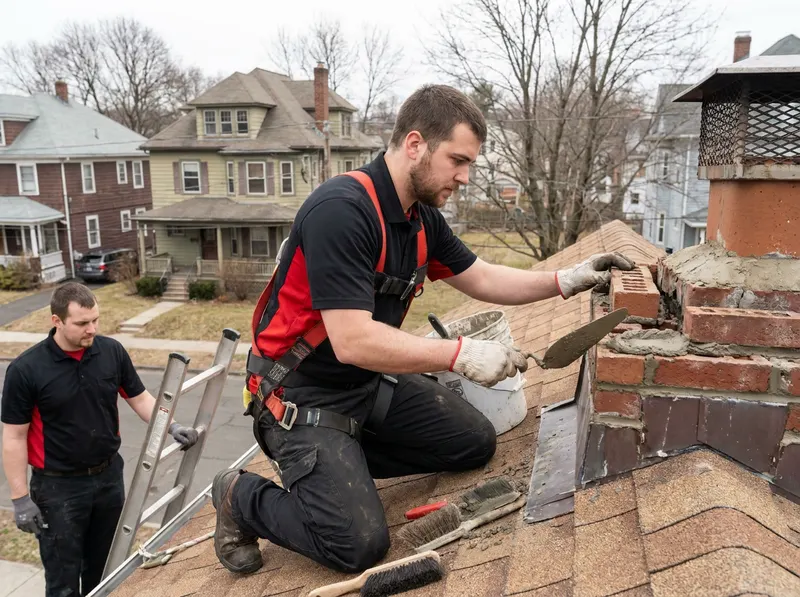
Chimney repair splits into masonry, wood, and fireplace-unit work, and the right fix depends on what an inspection finds, not on a guess from the sidewalk. Mortar chimney repair addresses joints that have eroded, cracked, or gone soft; on older brick chimneys around Asylum Hill and the West End, repointing the exposed courses and rebuilding the top few brick rows is common because a century of Hartford freeze-thaw cycles pulls moisture into open joints. Repointing keeps water out of the wall; left open, that same water is what starts wood rot lower down.
Repair of the wood structure of a chimney is a different job. On many Hartford-area homes, especially the wood-frame houses in Frog Hollow, Barry Square, and Behind the Rocks, a chimney chase is framed in wood and clad in siding or brick veneer. When flashing fails or mortar cracks let water in, the wood underneath the mortar can hold moisture and rot without any sign from inside the house. A chimney that leans, a soft chase wall, or dark staining at the roofline are the typical clues that a chimney might have some wood rot. Wood structure chimney repair means opening the affected section, removing rotted framing, replacing it with sound lumber, and re-flashing so water stays out. Because rot spreads with the water path, the cost scales with how far it traveled, a single rotted stud is a short job; a rebuilt chase wall is a multi-day one.
How the process runs, in order: (1) a Level 1 or Level 2 inspection per NFPA 211, following the Chimney Safety Institute of America (CSIA) protocol, documents the condition with photos; (2) the written findings show the exact joints, flashing, or wood involved; (3) a scope and price range are set from what's visible and what's likely behind it; (4) the repair proceeds, and hidden rot found during the work is shown before more is billed. FlueGuard leads with the evidence, the photos and the report, so a homeowner can see the crack or the soft wood rather than take a claim on faith.
Fireplace-unit repair is separate from masonry. Lennox fireplaces and other factory-built (zero-clearance) units use manufactured fireboxes, gaskets, blowers, and gas valves that wear or fail; Lennox fireplace repair replaces those specific parts rather than working on brick. A masonry crack calls for mortar or wood repair; a unit that won't light, won't draw, or has a cracked firebox panel calls for fireplace-unit service. If smoke is backing into the room, the cause could be either a blocked flue (a sweeping issue) or a fireplace fault, the inspection separates the two before any parts are quoted. FlueGuard's workers are bonded and insured, and drop cloths and containment are used so the living space stays clean during the work.
Every job gets a firm, written price after a free on-site visit.
Tell us about your chimney repair job in Hartford and we'll send a clear, written quote, usually the same day.
 Flue Guard Chimney Sweep